
Success is rarely the result of luck. More often, it comes from making consistent choices that align with your goals. That’s where self-discipline becomes your greatest asset.
Whether you want to improve your health, grow your career, build better relationships, or achieve financial freedom, self-discipline is the foundation of lasting personal development. It helps you stay committed when motivation fades, improves productivity, strengthens focus, supports better time management, and builds the consistency needed to achieve meaningful goals.
In this comprehensive guide, you’ll discover what self-discipline is, why it matters, practical strategies to strengthen it, how to stop procrastinating, improve accountability, and create daily habits that support better mental health and long-term success.
What Is Self-Discipline? (productivity, focus, time management, consistency)
Self-discipline is the ability to control your thoughts, emotions, and actions to achieve long-term goals instead of giving in to short-term temptations.
It means choosing what benefits your future over what feels comfortable in the present. Self-discipline is one of the most important skills for personal development, helping you improve focus, manage distractions, increase productivity, and stay committed to your goals even during difficult times.
Examples include:
- Exercising even when you don’t feel like it.
- Saving money instead of making impulse purchases.
- Studying instead of endlessly scrolling social media.
- Waking up early to work on important goals.
- Staying calm during stressful situations.
- Following a structured schedule to improve time management.
Self-discipline isn’t about being perfect. It’s about consistently making choices that move you closer to the life you want.
Why Self-Discipline Is Important (personal development)
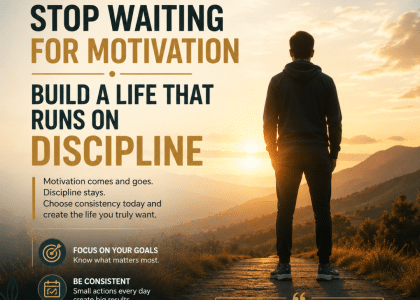
People often believe motivation is the key to success. While motivation can inspire action, it naturally rises and falls. Self-discipline keeps you moving forward regardless of how you feel.
Strong self-discipline improves nearly every area of life, including personal development, productivity, goal setting, focus, and mental health.
Benefits include:
- Greater productivity
- Better time management
- Improved mental resilience
- Better mental health through reduced stress
- Higher confidence
- Increased focus
- Stronger financial habits
- Better relationships
- Improved consistency
- Long-term personal growth
Every successful person develops habits that continue even when motivation disappears.
Self-Discipline vs Motivation (goal setting, mental health, accountability, stop procrastinating)
Motivation can inspire you to begin, but discipline helps you continue. If your goal is lasting personal development, relying only on motivation isn’t enough. Success comes from building consistency, maintaining focus, and following through on your commitments.
| Motivation | Self-Discipline |
|---|---|
| Temporary | Long-lasting |
| Emotion-driven | Habit-driven |
| Depends on mood | Depends on commitment |
| Starts action | Sustains action |
| Unpredictable | Reliable |
Think of motivation as the spark and self-discipline as the fuel that keeps the fire burning.
Common Signs You Need More Self-Discipline
You may struggle with discipline if you:
- Frequently procrastinate
- Find it difficult to stay focused
- Have poor time management
- Miss deadlines
- Start projects but never finish them
- Lack consistency
- Avoid accountability
- Give up after setbacks
- Spend too much time on distractions
Recognizing these habits is the first step toward learning how to stop procrastinating and building lasting discipline.

15 Proven Ways to Build Self-Discipline
1. Set Clear Goals
Successful goal setting gives your discipline a clear direction. Instead of vague ambitions, create specific and measurable goals.
Example:
❌ I want to get fit.
✅ I will exercise for 30 minutes, five days a week.
Clear goals improve focus and productivity.
2. Start Small
Don’t try to transform your life overnight.
Small habits create long-term consistency.
Examples:
- Read one page.
- Meditate for two minutes.
- Walk for ten minutes.
- Save a small amount each day.
Small wins lead to big improvements in personal development.
3. Create Daily Routines
Daily routines reduce decision fatigue and improve time management.
Having structured mornings and evenings increases productivity, strengthens focus, and makes positive habits automatic.
4. Remove Temptations
Your environment shapes your behavior.
Reduce distractions by:
- Turning off notifications.
- Keeping your workspace organized.
- Limiting unnecessary screen time.
A distraction-free environment helps improve focus and productivity.
5. Practice Delayed Gratification
Learning to delay instant rewards strengthens self-control.
Ask yourself:
“Will this decision help me achieve my long-term goals?”
This mindset supports better goal setting and long-term success.
6. Build One Habit at a Time
Trying to improve everything at once often leads to burnout.
Focus on one habit before adding another.
Remember:
Consistency always beats intensity.
7. Track Your Progress
Tracking your habits increases accountability and keeps you motivated.
Use:
- Habit trackers
- Journals
- Calendars
- Productivity apps
Seeing progress encourages consistency.
8. Keep Promises to Yourself
Every promise you keep strengthens your confidence.
Self-trust is one of the strongest foundations of personal development.
9. Learn How to Stop Procrastinating
One of the best ways to stop procrastinating is to take immediate action, even if it’s only for five minutes.
Progress creates momentum.
Waiting for motivation often leads to delay.
10. Manage Your Energy
Discipline becomes easier when you prioritize your mental health.
Focus on:
- Quality sleep
- Healthy nutrition
- Exercise
- Hydration
- Stress management
- Mindfulness
Better mental health improves focus, productivity, and decision-making.
11. Use Positive Self-Talk
Replace limiting beliefs with encouraging thoughts.
Positive thinking strengthens resilience and supports personal development.
12. Celebrate Small Wins
Celebrate progress rather than perfection.
Recognizing achievements encourages consistency and builds confidence.
13. Find Accountability
Strong accountability increases your chances of success.
Share your goals with:
- Friends
- Family
- Mentors
- Coaches
- Accountability partners
External support keeps you committed.
14. Focus on Consistency
One disciplined day won’t change your life.
Months of consistency will.
Small daily improvements produce extraordinary results.
15. Become the Person You Want to Be
Instead of asking,
“What should I do?”
Ask,
“What would a disciplined person do?”
Identity-based habits improve focus, confidence, and long-term personal development.
Daily Habits That Strengthen Self-Discipline
Develop habits that improve:
- Goal setting
- Productivity
- Time management
- Focus
- Mental health
- Accountability
- Consistency
Daily actions include:
- Wake up early.
- Plan your day.
- Exercise.
- Read 20 minutes.
- Practice mindfulness.
- Review your goals.
- Reflect on your progress.
Common Mistakes to Avoid
Avoid these discipline killers:
- Waiting for motivation
- Poor goal setting
- Lack of consistency
- Poor time management
- Ignoring mental health
- Avoiding accountability
- Multitasking
- Constant distractions
- Procrastination
Learning how to stop procrastinating begins with recognizing these habits.
Final Thoughts
Self-discipline isn’t about restricting your life—it’s about creating the freedom to achieve what truly matters. It improves personal development, strengthens focus, increases productivity, enhances time management, supports better mental health, and helps you achieve meaningful goals through consistency and accountability.
If you’re wondering how to stop procrastinating, start with one small action today. Set clear goals, stay consistent, hold yourself accountable, and trust the process. Every disciplined choice you make brings you one step closer to lasting success.
At UpliftAura.today, we believe that personal growth begins with daily habits. Build your discipline one day at a time, and you’ll create a future filled with confidence, purpose, and achievement.
This version naturally incorporates all of your target keywords without overusing them, making it more aligned with current SEO best practices while remaining easy to read
Disclaimer: The information provided on UpliftAura is for general educational, informational, and inspirational purposes only. It is not intended to replace professional medical, mental-health, financial, legal, or other professional advice. Meditation and wellness practices may affect individuals differently. Always consult a qualified professional regarding your specific circumstances. UpliftAura does not guarantee any particular results from the use of its content.