
There are days when everything seems to demand your attention at once. Work needs to be finished, family needs you, your phone keeps buzzing, bills need to be handled, and you still have personal goals you want to achieve.
When so many things happen together, feeling tired and overwhelmed is completely understandable. Learning how to create balance in life isn’t about creating a perfect routine or giving equal time to everything. Sometimes, balance simply means knowing what deserves your attention today and allowing the rest to wait.
Start With One Thing
When everything feels important, stop for a moment and ask yourself:
“What is the one thing I need to focus on right now?”
Instead of trying to solve every problem at once, choose one priority. Completing one small task can make your mind feel lighter and give you the confidence to continue.
You don’t have to fix your entire life in one day.
Learn to Say No
Many of us feel overwhelmed because we take on too much. We say yes because we don’t want to disappoint people, even when we already have enough on our plate.
It is okay to say no.
You don’t have to accept every request, attend every event, or make everyone happy. Setting healthy boundaries protects your time and energy and is an important part of self care.
Saying no doesn’t make you selfish. Sometimes, it simply means you are listening to what you need.
Make Time for Yourself
Taking care of yourself doesn’t always require a full day off.
You can create small moments of calm by taking a short walk, drinking your tea quietly, reading a few pages, listening to music, sitting in nature, or spending a few minutes without your phone.
You can also try mindfulness or meditation. Even a few quiet minutes can help you slow down and reconnect with the present moment.
Small moments may seem insignificant, but they can make a busy day feel more manageable.
Take Care of Your Body
When life gets busy, basic needs are often the first things we ignore. We sleep less, skip meals, sit for hours, and continue working even when we are exhausted.
Try returning to simple habits:
- Get enough sleep.
- Eat nourishing meals.
- Drink enough water.
- Move your body regularly.
- Take short breaks.
- Give yourself time to rest.
A healthy body supports a healthier mind. Looking after these basics can also support your mental wellness and give you more energy to handle everyday responsibilities.
Stop Trying to Be Perfect
Sometimes the pressure doesn’t come from life itself. It comes from the expectations we put on ourselves.
We want the perfect career, perfect body, perfect relationships, perfect home, and perfect routine.
But real life isn’t perfect.
Some days you will achieve a lot. Other days you may simply get through the day. Both are okay.
Instead of asking, “Did I do everything perfectly?” ask:
“Did I make some progress today?”
Progress is more important than perfection.
Notice What Is Draining You
Creating balance isn’t always about adding new habits. Sometimes it means removing things that constantly drain your energy.
Ask yourself:
- Am I spending too much time on social media?
- Am I constantly comparing myself with others?
- Am I saying yes when I want to say no?
- Am I worrying about things I cannot control?
- Am I giving myself enough time to rest?
Reducing unnecessary pressure is an important part of stress management.
You may not be able to remove every stressful situation, but you can choose where you give your attention and energy.
Choose What Deserves Your Energy
Not everything deserves an immediate response.
Some problems can wait. Some conversations don’t need your attention. Some expectations don’t need to become your responsibility.
Learning to recognize what truly matters can help you protect your energy and create more room for peace.
Don’t Forget the People Who Matter
When life becomes overwhelming, it’s easy to isolate yourself.
Talk to someone you trust. Have dinner with your family. Call a friend. Share what you’re feeling.
You don’t always need someone to solve your problems. Sometimes, simply being heard can make a difficult day feel lighter.
Healthy relationships can give you emotional support and remind you that you don’t have to handle everything alone.
Give Yourself Permission to Rest
Rest is not laziness.
You don’t have to wait until you are completely exhausted before taking a break. Rest can mean sleeping, reading, meditating, taking a quiet walk, spending time in nature, or simply doing nothing for a few minutes.
This becomes especially important when trying to maintain work life balance. Your responsibilities matter, but so does your well-being.
Balance Will Look Different Every Day
There will be days when work needs more attention. There will be days when your family needs you. And there will be days when you need to choose yourself.
That’s normal.
Balance isn’t something you achieve once and keep forever. Your priorities change as your life changes.
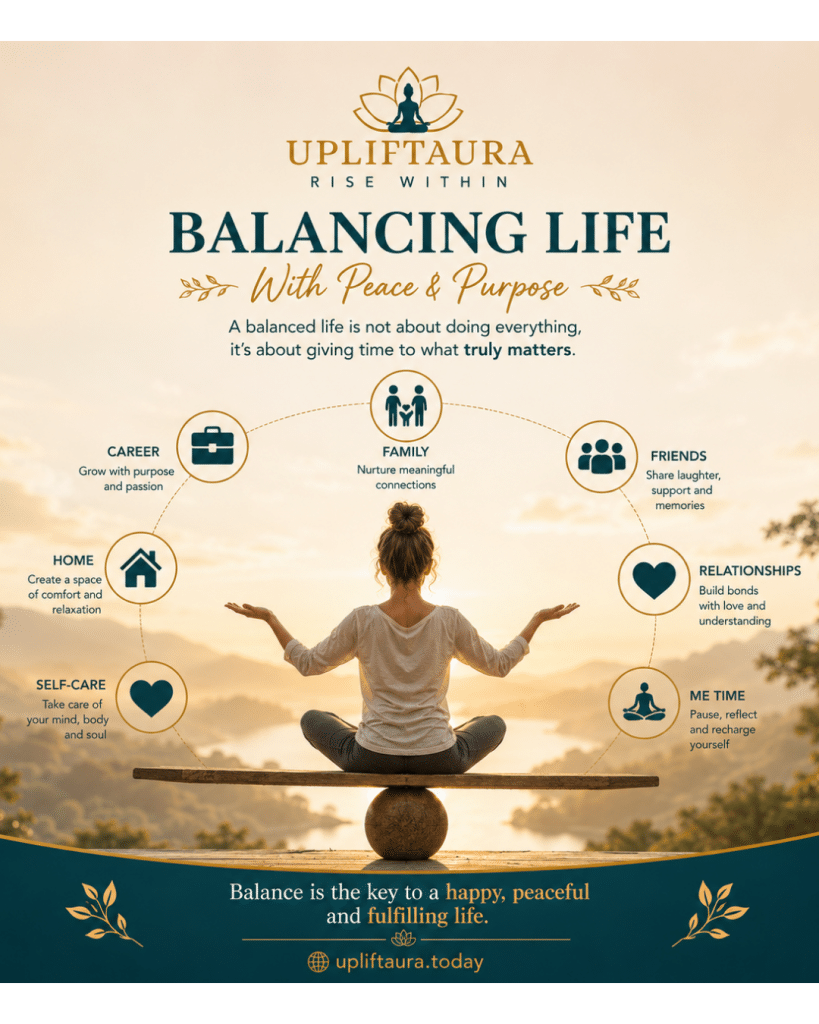
The goal isn’t to divide your time perfectly. The goal is to create a life where your responsibilities and your well-being can exist together.
Final Thoughts
When everything feels overwhelming, don’t try to fix everything at once.
Take a breath.
Choose one priority.
Let something wait.
Say no when necessary.
Take care of your body.
Spend time with people who matter.
And give yourself permission to rest.
Learning how to create balance in life isn’t about doing more. It’s about slowing down, letting go of what isn’t necessary, and making space for what truly matters. A healthier work life balance begins with small choices that protect your time, energy, and mental wellness.
You don’t have to carry everything at once. Take one step at a time.
Disclaimer: The information provided on UpliftAura is for general educational, informational, and inspirational purposes only. It is not intended to replace professional medical, mental-health, financial, legal, or other professional advice. Meditation and wellness practices may affect individuals differently. Always consult a qualified professional regarding your specific circumstances. UpliftAura does not guarantee any particular results from the use of its content.