
Introduction
In today’s fast-moving world, most people focus heavily on physical health, career growth, responsibilities, and productivity. We try to manage everything efficiently while constantly staying busy. But in the middle of all this, one important thing is often ignored mental wellness and mental health.
For a long time, I also believed that being busy meant being successful. I would complete tasks, manage responsibilities, and continue moving forward even when my mind felt exhausted. Outwardly everything looked normal, but internally, I often felt emotionally drained, restless, and overwhelmed.
That experience made me realize something very important:
A healthy life is not only about physical wellbeing. Mental health, emotional wellness, and inner balance matter just as much.
Our thoughts, emotions, stress levels, and inner peace affect every part of our daily life from relationships and decision-making to productivity and overall happiness. Maintaining positive mental health allows us to live with greater clarity, resilience, and purpose.
When the mind feels balanced, life feels lighter.
A} What Is Mental Wellness? (Mentalhealth& emotional wellness)
Mental wellness does not mean feeling happy all the time or never experiencing stress. Life naturally includes challenges, emotional ups and downs, and difficult moments.
Mental wellness means:
- Having emotional balance
- Practicing effective stress management
- Feeling mentally calm and stable
- Understanding your emotions better
- Maintaining inner peace during daily life
- Supporting long-term mental health
It is about creating a healthy relationship with your thoughts, emotions, and overall mindset.
Just like physical health requires care, mental wellness also needs regular attention through self-care, mindfulness, and healthy daily habits.
B} Why Mental Wellness Is Important in Daily Life (self–care & mindfulness)
1. Mental Wellness Improves Emotional Balance
When the mind is constantly stressed, even small situations begin to feel overwhelming. We become more reactive, impatient, and emotionally exhausted.
I personally noticed that whenever my mental wellbeing was ignored, I would overthink more, react impulsively, and feel emotionally drained for no clear reason.
But practices like mindfulness, meditation, silence, and self-awareness slowly helped me feel calmer internally. These habits play a major role in building emotional wellness and maintaining positive mental health.
Mental wellness allows us to:
- Respond calmly during stressful situations
- Handle emotions with awareness
- Reduce overthinking and anxiety
- Feel more emotionally stable
- Improve overall mental health
A calm mind creates a calmer life.
2. It Helps Us Handle Stress Better
Stress has become a normal part of modern life. Work pressure, personal responsibilities, financial concerns, social expectations, and constant distractions can easily overwhelm the mind.
Without proper stress management, stress slowly affects:
- Sleep quality
- Energy levels
- Focus and productivity
- Emotional health
- Relationships
- Overall mental health
One important lesson I learned through my mindfulness journey is that stress does not always disappear completely, but we can learn healthier ways to respond to it.
Simple habits like:
- Deep breathing
- Meditation
- Spending time in silence
- Taking mindful breaks
- Limiting unnecessary distractions
can help reduce mental pressure, strengthen emotional wellness, and support better mental health.
3. Mental Wellness Improves Focus and Productivity
Many people think productivity only depends on discipline or hard work. But mental clarity plays an equally important role.
When the mind feels overwhelmed, concentration becomes difficult. We struggle to focus, make decisions, and complete even simple tasks efficiently.
I experienced this personally during stressful phases when my thoughts felt constantly crowded. No matter how hard I tried to work, my mental exhaustion reduced my productivity.
Over time, I realized that taking care of mental health through regular self-care and mindfulness practices actually improves:
- Focus and concentration
- Creativity
- Decision-making
- Motivation
- Daily productivity
A peaceful mind works better than a stressed mind.
4. It Strengthens Relationships
Our mental state affects the way we communicate and connect with others.
When we are emotionally overwhelmed, we often become impatient, distracted, or emotionally unavailable in relationships. But when the mind feels balanced, we naturally become more understanding, present, and emotionally connected.
Strong emotional wellness helps improve:
- Communication
- Patience
- Emotional understanding
- Compassion
- Healthy boundaries
Maintaining positive mental health not only benefits us but also improves the quality of our relationships.
Inner peace reflects in the way we treat people around us.
5. Mental Wellness Encourages Self-Awareness
One of the most powerful parts of mental wellness is self-awareness.
Through mindfulness and meditation, I slowly became more aware of my thoughts, emotional patterns, reactions, and habits. This awareness helped me understand myself better.
Instead of constantly blaming external situations for stress, I began noticing how my own thoughts influenced my emotional state.
Self-awareness allows us to:
- Understand our emotions deeply
- Recognize unhealthy thought patterns
- Make better decisions
- Build healthier habits
- Create personal growth naturally
This level of awareness contributes significantly to long-term mental health and positive mental health.
Real change begins with awareness.
C} Simple Ways to Improve Mental Wellness Daily
Mental wellness does not require complicated routines or dramatic life changes. Small consistent habits can make a big difference over time.
Here are a few practices that personally helped me:
1) Practice Mindfulness
Spend a few minutes daily being fully present without distractions. Regular mindfulness practice improves focus, reduces anxiety, and supports emotional balance.
2) Take Breaks from Constant Noise
Silence and quiet moments help calm the mind and improve emotional wellness.
3) Limit Excessive Screen Time
Too much information and social media can increase mental exhaustion and negatively impact mental health.
4) Spend Time in Nature
Nature has a calming effect on the mind and emotions while promoting positive mental health.
5) Prioritize Rest
Mental wellness becomes difficult without proper sleep and relaxation.
6) Practice Meditation
Even a few minutes of meditation daily can improve emotional balance, strengthen stress management, and increase mental clarity.
7) Make Self-Care a Priority
Consistent self-care activities such as reading, exercising, journaling, or spending time with loved ones can significantly improve mental health and emotional wellbeing.
*) Be Kind to Yourself
Not every day needs to be perfectly productive. Rest and slow days are also important parts of healthy self-care.
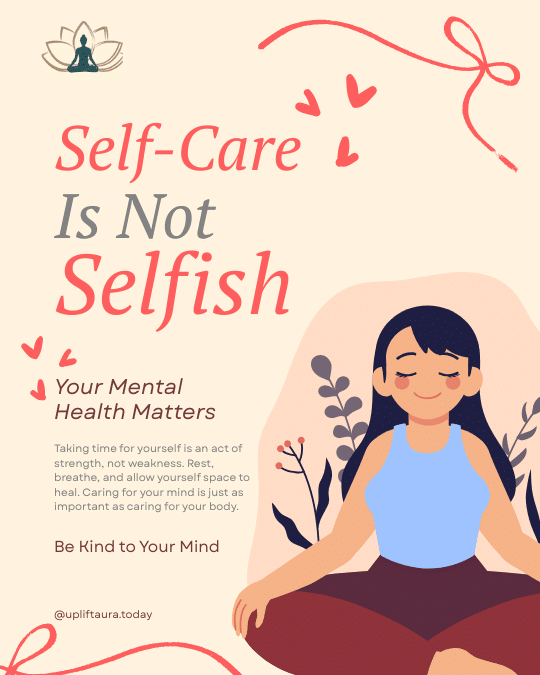
D} Mental Wellness Is Not Selfish
One thing I deeply believe is that taking care of your mental health is not selfish.
Many people ignore their emotional wellness while constantly taking care of responsibilities, work, and others around them. But when the mind becomes completely exhausted, every area of life suffers.
Protecting your mental wellness helps you:
- Feel more balanced
- Think more clearly
- Support others better
- Handle challenges calmly
- Live more peacefully
Regular self-care, effective stress management, and mindfulness practices allow us to show up as our best selves.
Your inner wellbeing deserves attention too.
Conclusion
Today, mental wellness has become an essential part of my daily life. Through mindfulness, meditation, silence, self-awareness, and consistent self-care, I have learned that peace is not something we find outside ourselves.
It begins within.
Mental wellness is not about avoiding difficult emotions or living a perfect life. It is about creating balance, understanding yourself better, and learning how to care for your mind with patience and awareness.
In a world that constantly pushes us to do more, maintaining strong mental health, practicing stress management, and nurturing emotional wellness have become more important than ever.
Because when the mind feels healthy, life feels lighter, calmer, more meaningful, and supportive of positive mental health every day.
Disclaimer: The information provided on UpliftAura is for general educational, informational, and inspirational purposes only. It is not intended to replace professional medical, mental-health, financial, legal, or other professional advice. Meditation and wellness practices may affect individuals differently. Always consult a qualified professional regarding your specific circumstances. UpliftAura does not guarantee any particular results from the use of its content.